
Cats are often viewed as the more independent pet species. They can make ideal companions for people who work outside the home, don’t have time for midday potty breaks, or live without yard space. Cats also have a reputation for being less work than their canine counterparts.
However, cats need enrichment just like dogs do! A bored cat can develop stress, anxiety, and behavioral concerns such as overgrooming, inappropriate urination, destructive behavior, and overeating.
In this months newsletter, we'll dive into how you can keep your feline companions happy, stress free, and active!
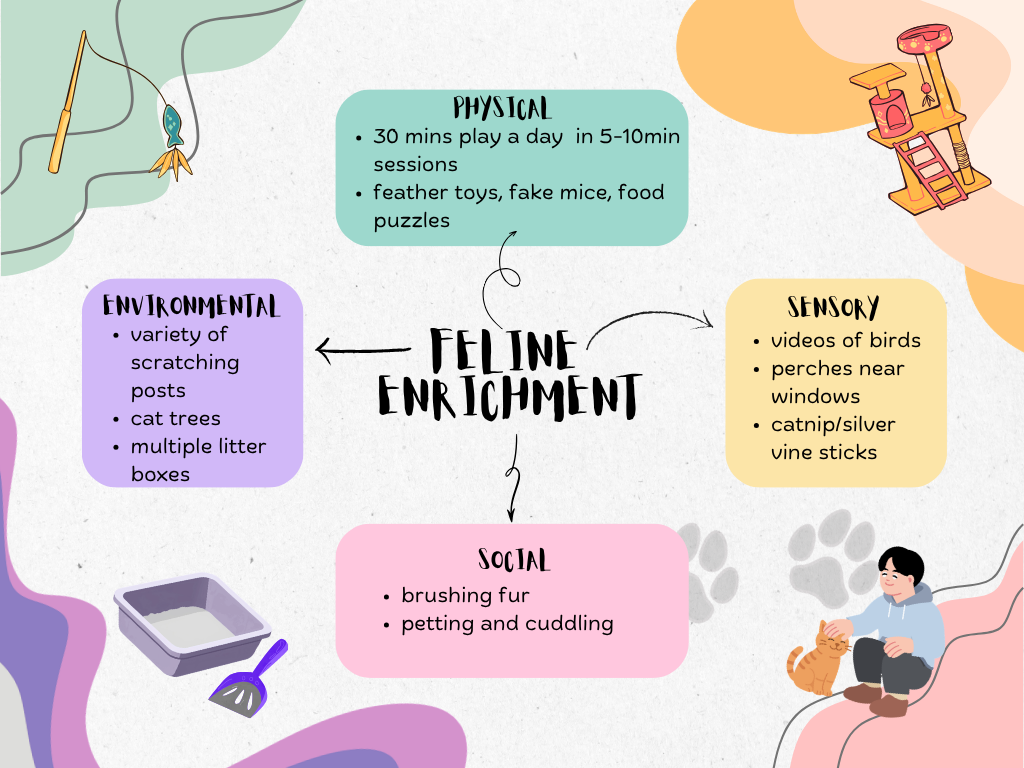
The Four Areas of Enrichment
Cats have four primary enrichment needs: physical, sensory, environmental, and social. Addressing all four areas helps support your cat’s overall mental and physical wellbeing.
Physical
Cats need playtime too! Most cats benefit from about 30 minutes of play daily, ideally divided into multiple 5–10 minute sessions throughout the day.
Expert Tip:
Your cat’s ancestors hunted insects, birds, mice, and other small animals to survive. While our domesticated cats no longer need to hunt for food, they still love to stalk and pounce! Introduce a variety of toys that satisfy their natural prey drive, including:
- Wand toys
- Interactive toys that move or make noise
- Toy mice
- Food puzzles and treat dispensers
Remember: not all cats enjoy the same toys. Finding what works best for your cat’s individual preferences is key.
Safety Reminder:
Hands, feet, and string-like objects such as yarn are not safe toys. Cat bites and scratches can lead to infections, and swallowing string-like materials can cause dangerous gastrointestinal obstructions.
Sensory
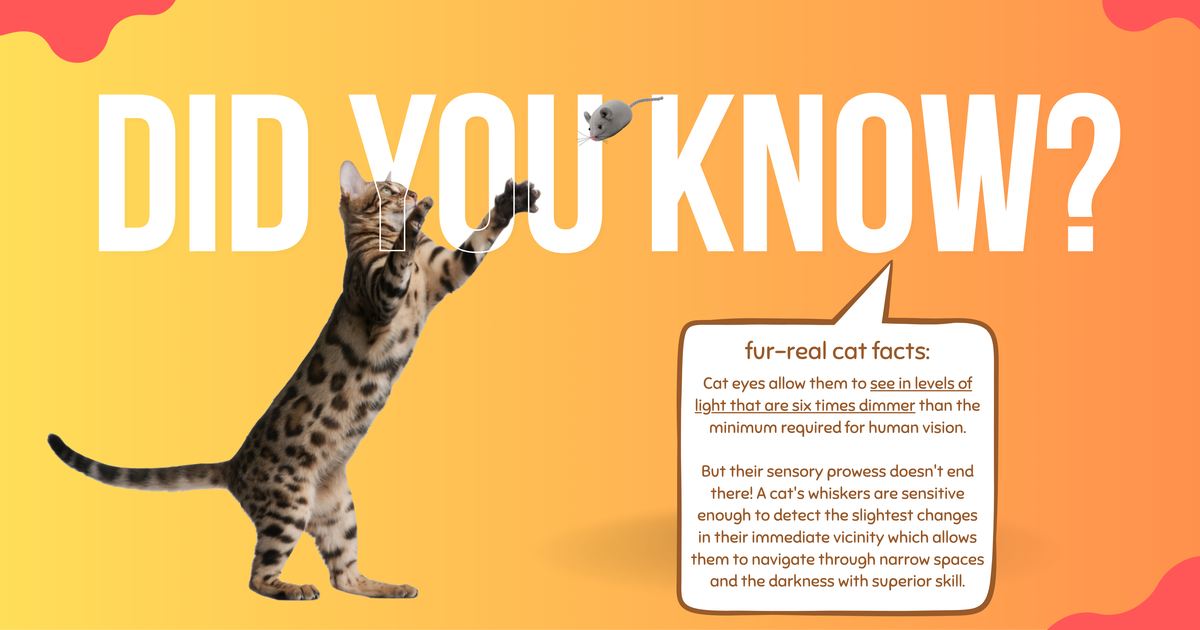
Sensory enrichment engages your cat’s senses: sound, sight, smell, taste, and touch.
Many cats enjoy watching videos designed specifically for their entertainment, such as birds, squirrels, or fish. Placing a perch or cat tree near a window also provides excellent visual stimulation while supporting environmental enrichment needs.
Catnip is another great enrichment tool for many cats. For cats that don’t respond to catnip, silver vine sticks can be an excellent alternative.
Expert Tip:
If your cat is experiencing a stressful change, such as moving, welcoming a new family member, or introducing another pet, a pheromone diffuser such a Feliway may help ease anxiety.
You may have noticed a Feliway Diffuser in our feline exam rooms. Feliway releases a synthetic pheromone that mimics the calming facial pheromones cats naturally produce when they feel safe and secure. These pheromones can help create a more comforting environment for your cat.
For more information, visit the Feliway website HERE.
Environmental
Most pet cats spend the majority of their time indoors, so creating an engaging home environment is essential.
Cat trees, scratching posts, cozy resting spots, and multiple litter boxes all help meet your cat’s environmental needs. Cats also appreciate having quiet, secure areas where they can relax undisturbed, whether it’s a soft bed, blanket, or enclosed kitty cave.
Expert Tip:
Provide multiple scratching surfaces with different textures and heights. Many cats prefer materials they can shred, such as sisal rope or cardboard. Scratching is also a way for cats to mark territory through scent, so placing scratchers near room entrances or sleeping areas often encourages use.
Litter Box Guidelines
A good rule of thumb is:
One litter box per cat, plus one extra.
Litter boxes should be:
- Scooped daily
- Located in quiet, private areas
- Easily accessible
Safety Reminder:
If your cat is displaying any behavioral concerns when going to the bathroom it's probably time for a vet visit. Behaviors such as frequent visits to the litter box with little to no urine production, and painful urination, often expressed by vocalizing or straining may be indicative of a urinary blockage which is a medical emergency.
Social
Feed two birds with one seed by fulfilling your cats social needs and improving your own health!
Gentle petting, brushing, and interactive bonding can help reduce stress in cats while also supporting human health. According to Linda Case, former professor at the University of Illinois and animal behavior specialist, interacting with cats can trigger the release of serotonin, dopamine, and oxytocin in humans, hormones associated with happiness, bonding, and relaxation.
At the same time, cortisol levels (often called the “stress hormone”) may decrease when people spend time with cats. Lower cortisol levels can contribute to reduced stress, lower blood pressure, and improved overall wellbeing.
So while enrichment keeps your cat healthier and happier, it may also provide important health benefits for you too!
Providing enrichment doesn’t have to be complicated or expensive. Small daily changes can make a huge difference in your cat’s mental and physical health. By supporting your cat’s physical, sensory, environmental, and social needs, you can help them live a happier, healthier, and more fulfilled life.

While enrichment can be a wonderful tool for preventing boredom and supporting healthy behavior, it’s important to remember that some changes in behavior may have a more complex underlying cause. If you ever notice ongoing stress, anxiety, aggression, inappropriate elimination, or other concerning behaviors, please don’t hesitate to reach out. Our team is here to help determine whether your cat may benefit from additional medical or behavioral support so we can work together to keep them happy, healthy, and comfortable.
Thank you for spending time with us this month! We hope the weeks ahead are filled with plenty of purrs, playtime, and cozy cuddles with your pets. We’ll see you again next month!