

When a Limp Means More Than a Sprain
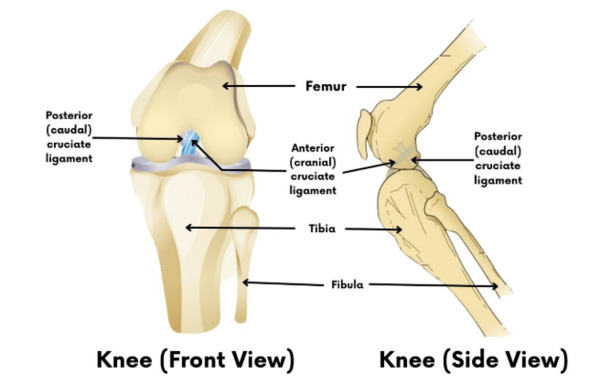
One of the most common causes of hind leg lameness in dogs is a cranial cruciate ligament (CCL) tear. The CCL in dogs is similar to the ACL in humans and plays a vital role in stabilizing the knee (stifle) joint.
A torn CCL can be painful and significantly affect your dog's mobility, but with early diagnosis and appropriate treatment, most dogs can return to living happy, active lives. This month, we're taking a closer look at what causes CCL tears, the signs to watch for, treatment options, and what recovery looks like.
What Causes a CCL Tear?
The cranial cruciate ligament is the primary stabilizer of the knee joint. When dogs are diagnosed with a torn cruciate ligament, it is almost always the cranial cruciate ligament (CCL) that has been damaged.
There are two main ways a CCL tear can occur:
- Degenerative CCL Disease (most common): Over time, the ligament gradually weakens and deteriorates. Once inflammation develops within the ligament, approximately 85% of dogs will eventually experience a complete rupture.
- Acute Traumatic Injury: Less commonly, a healthy ligament can tear suddenly due to a significant injury, such as a fall or other trauma.
While CCL tears are seen more frequently in larger breeds such as Labrador Retrievers and Golden Retrievers, any breed or size of dog can be affected.
Unfortunately, CCL disease often affects both knees. Studies show that more than half of dogs that tear one CCL will rupture the ligament in the opposite knee within three years.
Signs to Watch For
Dogs with degenerative CCL disease often show subtle signs at first that gradually worsen over time. These may include:
- Stiffness, especially after rest
- Limping or intermittent lameness
- Difficulty rising or jumping
- Reluctance to exercise or play
- Sitting with one leg extended to the side
As the disease progresses, many dogs become non-weight-bearing on the affected leg.
Dogs that experience an acute traumatic tear are typically suddenly unable to bear weight on the affected limb and are often quite painful.
If you notice any of these signs, it's important to schedule an examination as soon as possible.
How Is a CCL Tear Diagnosed?
In many cases, your veterinarian can diagnose a CCL tear during a physical examination.
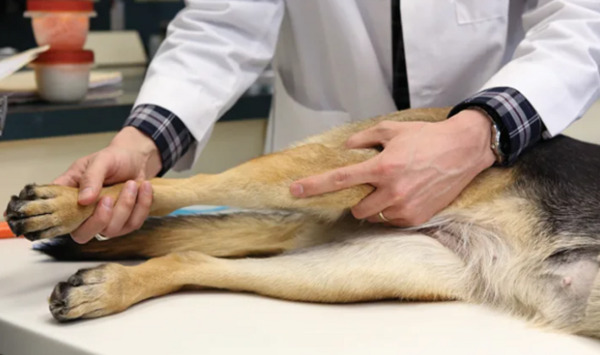
One common test is the cranial drawer test, which evaluates the stability of the knee. During this exam, your veterinarian gently holds the thigh bone steady while attempting to move the shin bone forward. Excessive movement indicates a torn CCL.
Radiographs (X-rays) are often recommended as well. While they do not show the ligament itself, they help evaluate joint inflammation, arthritis, and rule out other injuries.
Treatment Options
For most dogs, surgery is the recommended treatment for a torn CCL.
One of the most successful procedures available is the TPLO (Tibial Plateau Leveling Osteotomy). Over the past two decades, TPLO has become the most extensively researched orthopedic procedure in veterinary medicine and consistently provides excellent outcomes.
Compared with other surgical techniques, TPLO patients generally experience:
- Faster recovery
- Better long-term joint function
- Improved range of motion
- Less arthritis over time
- Return to normal or near-normal activity in approximately 90% of patients
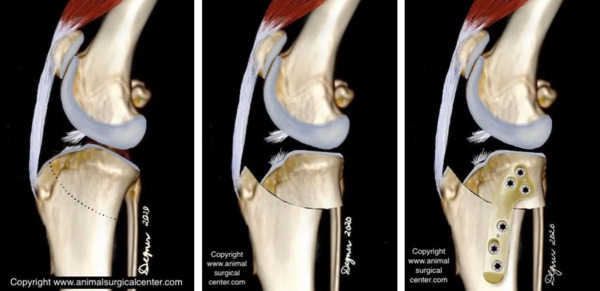
Rather than repairing the torn ligament itself (which is currently not possible), a TPLO changes the mechanics of the knee so the ligament is no longer needed for stability.
During surgery, the top portion of the tibia (shin bone) is carefully cut and rotated to change the angle of the knee. The bone is then secured with a specialized plate and screws, creating a stable joint that allows dogs to regain comfortable function.
What Does Recovery Look Like?
Recovery from TPLO surgery typically takes about 12 weeks, although every patient heals at their own pace.
A successful recovery includes:
- Strict leash walks only
- Limited activity and plenty of rest
- Pain management
- Incision and wound care
- Passive range-of-motion exercises as directed
Some dogs also benefit from rehabilitation therapies such as:
- Physical therapy
- Underwater treadmill or hydrotherapy
- Ice and heat therapy (when recommended by your veterinarian)
Following your pet's post-operative instructions is one of the most important factors in achieving the best possible outcome.
Doctor Spotlight
We're Excited to Offer TPLO Surgery at DePorre Veterinary Hospital!
We are proud to announce that Dr. DeHondt now performs TPLO surgeries right here at DePorre Veterinary Hospital.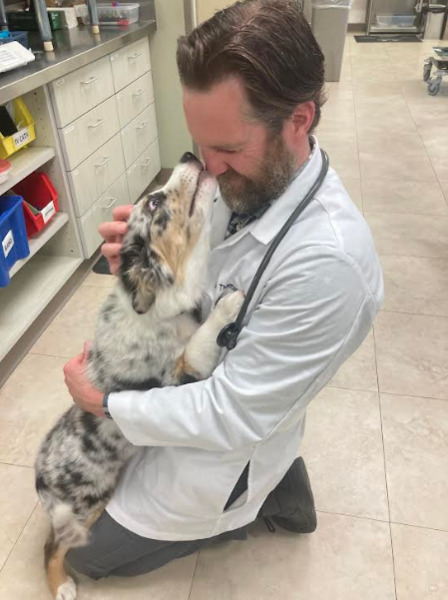
After extensive training and continuing education, Dr. DeHondt has expanded his surgical expertise to include this highly successful orthopedic procedure. Having spent his entire veterinary career at DePorre and serving as a co-owner of the practice, he has always had a passion for surgery and is excited to provide this advanced level of care to our patients.
If your dog has been limping, struggling to get around, or you suspect a CCL injury, we're here to help. Our doctors can evaluate your pet, discuss treatment options, and determine whether TPLO surgery is the best choice.

We're Here for You and Your Pet
A CCL tear can feel overwhelming, but with prompt diagnosis, appropriate treatment, and a dedicated recovery plan, the prognosis is excellent for most dogs.
If you have questions or would like to schedule an orthopedic evaluation, please contact our team. We're committed to helping your pet get back to enjoying walks, playtime, and life with your family.
Call us today to schedule an appointment; we're happy to help keep your best friend moving comfortably.